
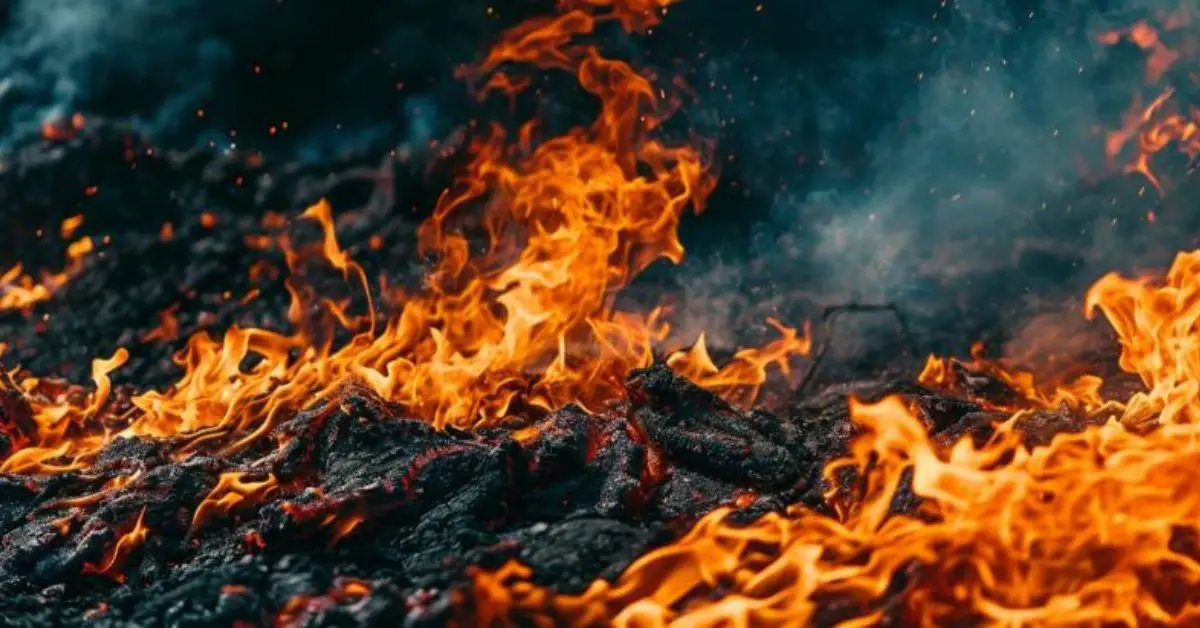
Fire is one of the most powerful forces in nature.
It can bring warmth, light, and protection, but it can also destroy, consume, and purify.
Throughout the Bible, fire is used as a symbol of God’s presence, judgment, power, and purification.
It appears in many key moments, from the burning bush that spoke to Moses to the fire of Pentecost that filled the early believers.
So, what does the Bible say about fire?
Is it something to fear or something to embrace?
Let’s explore the different ways fire is used in Scripture and what it teaches us about God’s nature and His plans for humanity.
Fire as a Symbol of God’s Presence
One of the most famous examples of fire in the Bible is when God spoke to Moses through a burning bush.
Exodus 3:2 says, “There the angel of the Lord appeared to him in flames of fire from within a bush. Moses saw that though the bush was on fire it did not burn up.”
This fire was different—it did not consume the bush.
It was a symbol of God’s holy presence, showing that He was near and calling Moses for a great purpose.
Later, when God led the Israelites out of Egypt, He used fire to guide them.
Exodus 13:21 says, “By day the Lord went ahead of them in a pillar of cloud to guide them on their way and by night in a pillar of fire to give them light, so that they could travel by day or night.”
The fire was not just a light in the darkness—it was a reminder that God was with them.
Throughout Scripture, fire is often used as a sign that God is present, powerful, and leading His people.
Fire as a Sign of God’s Judgment
While fire represents God’s presence, it also represents His judgment.
The most well-known example of this is the destruction of Sodom and Gomorrah.
Genesis 19:24 says, “Then the Lord rained down burning sulfur on Sodom and Gomorrah—from the Lord out of the heavens.”
The fire that fell from heaven was a sign of God’s judgment against the wickedness in those cities.
In the New Testament, fire is also associated with the final judgment.
2 Thessalonians 1:7-8 says, “This will happen when the Lord Jesus is revealed from heaven in blazing fire with his powerful angels. He will punish those who do not know God and do not obey the gospel of our Lord Jesus.”
Fire is a picture of divine justice, showing that God does not overlook sin but will judge it in His perfect timing.
Fire as a Tool for Purification
Fire does not just destroy—it also purifies.
Gold and silver must go through fire to remove impurities, and the Bible often compares this process to how God refines His people.
Zechariah 13:9 says, “This third I will put into the fire; I will refine them like silver and test them like gold. They will call on my name and I will answer them; I will say, ‘They are my people,’ and they will say, ‘The Lord is our God.’”
God allows trials in life to refine and strengthen His people, just as fire removes impurities from metal.
1 Peter 1:7 says, “These have come so that the proven genuineness of your faith—of greater worth than gold, which perishes even though refined by fire—may result in praise, glory and honor when Jesus Christ is revealed.”
Difficulties and challenges are not meant to destroy believers but to purify them and make their faith stronger.
Fire and the Holy Spirit
In the New Testament, fire is closely connected to the Holy Spirit.
When Jesus’ followers were gathered after His resurrection, they received the Holy Spirit in a powerful way.
Acts 2:3-4 says, “They saw what seemed to be tongues of fire that separated and came to rest on each of them. All of them were filled with the Holy Spirit and began to speak in other tongues as the Spirit enabled them.”
The fire represented God’s power filling His people, giving them boldness to spread the gospel.
Fire is often used to describe spiritual passion.
John the Baptist spoke of Jesus, saying in Matthew 3:11, “He will baptize you with the Holy Spirit and fire.”
The fire of the Holy Spirit purifies, empowers, and fills believers with the presence of God.
It is a fire that should never go out.
The Fire of Worship and Sacrifice
Fire was a key part of worship in the Old Testament.
Sacrifices were burned on altars as an offering to God, symbolizing devotion and atonement for sin.
Leviticus 6:13 says, “The fire must be kept burning on the altar continuously; it must not go out.”
This fire was not just about burning sacrifices—it represented a continual dedication to God.
The Bible also describes prayer and worship as a form of spiritual fire.
Psalm 141:2 says, “May my prayer be set before you like incense; may the lifting up of my hands be like the evening sacrifice.”
When believers worship and pray with sincerity, it is like a fire rising up to God, pleasing Him.
The Fire of Trials and Testing
Life is full of challenges, and the Bible compares them to going through fire.
Isaiah 43:2 says, “When you walk through the fire, you will not be burned; the flames will not set you ablaze.”
This verse reminds believers that God is with them in the hardest times.
Even when life feels overwhelming, His presence protects and strengthens them.
Shadrach, Meshach, and Abednego experienced this literally.
In Daniel 3, they refused to bow to the king’s idol and were thrown into a fiery furnace.
Yet, they were not burned because God was with them.
Daniel 3:25 says, “Look! I see four men walking around in the fire, unbound and unharmed, and the fourth looks like a son of the gods.”
God did not take them out of the fire—He joined them in it.
Sometimes, instead of removing trials, God walks with His people through them.
The Eternal Fire
The Bible also speaks of an eternal fire, describing hell as a place of judgment.
Matthew 25:41 says, “Then he will say to those on his left, ‘Depart from me, you who are cursed, into the eternal fire prepared for the devil and his angels.’”
Hell is described as a place of fire, not because God enjoys punishment, but because separation from Him is the ultimate consequence of rejecting His grace.
Revelation 20:15 says, “Anyone whose name was not found written in the book of life was thrown into the lake of fire.”
The good news is that God offers salvation to all who believe in Jesus.
Through Christ, people can avoid this eternal fire and receive the gift of eternal life.
Keeping the Fire of Faith Alive
The Bible encourages believers to keep their spiritual fire burning.
Paul told Timothy in 2 Timothy 1:6, “For this reason I remind you to fan into flame the gift of God, which is in you through the laying on of my hands.”
Faith should not grow cold.
It must be stirred, nurtured, and kept alive through prayer, worship, and obedience.
Revelation 3:15-16 warns against becoming lukewarm in faith: “I know your deeds, that you are neither cold nor hot. I wish you were either one or the other! So, because you are lukewarm—neither hot nor cold—I am about to spit you out of my mouth.”
A passionate, burning faith is what God desires.
He wants His people to be on fire for Him, living with boldness and devotion.
Final Thoughts
Fire in the Bible is a powerful symbol with many meanings.
It represents God’s presence, His judgment, His purification, and His Spirit.
It shows His power to refine, protect, and guide His people.
While fire can destroy, it can also bring life and transformation.
God’s desire is not to burn people up with judgment but to refine them like gold, filling them with His Spirit and guiding them into His purposes.
A life set on fire for God is a life filled with passion, faith, and the power of the Holy Spirit.
Keep the fire burning.
Keep seeking His presence.
Let the fire of God shape you into who He has called you to be.