
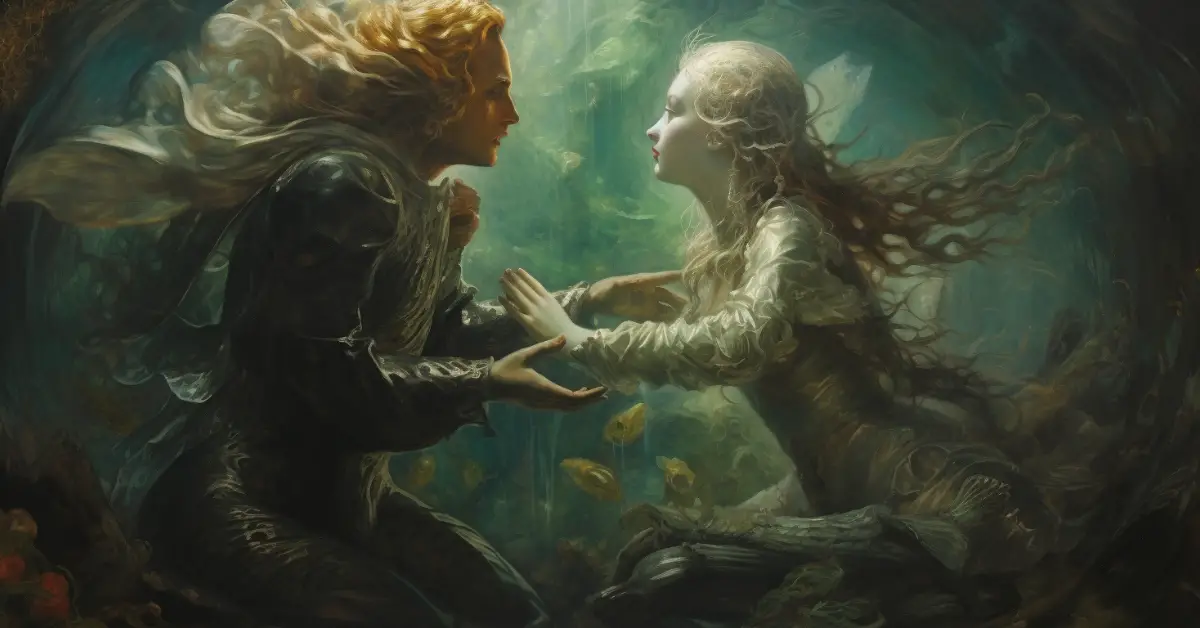
Mermaids have fascinated people for centuries.
Legends of half-human, half-fish creatures appear in myths from all over the world.
From ancient sailors’ tales to modern-day movies, mermaids have captured human imagination.
But what does the Bible say about mermaids?
Are they real, or are they just mythical creatures?
Does Scripture give any clues about mermaids, sea spirits, or supernatural beings that might resemble them?
While the Bible does not specifically mention mermaids, it does talk about creatures of the sea, spiritual beings, and legends that have influenced history.
Let’s explore what Scripture teaches and whether mermaids have any connection to biblical truth.
Mermaids in Ancient Cultures
Mermaid stories did not start with fairy tales.
For thousands of years, different cultures have described sea creatures that look like humans.
Ancient Babylonian mythology speaks of Oannes, a fish-like being that supposedly gave wisdom to mankind.
Greek mythology describes sirens, beautiful half-women, half-fish creatures that lured sailors to their deaths with enchanting songs.
In some African traditions, water spirits called Mami Wata were believed to bring blessings or curses to those who encountered them.
Even in medieval times, sailors claimed to see mermaids in the ocean.
Christopher Columbus, the famous explorer, wrote in his journals about seeing mermaid-like creatures in the waters of the Caribbean.
However, many historians believe he was actually seeing manatees or dugongs, sea animals that might look human-like from a distance.
Though mermaids appear in different legends, does the Bible confirm or deny their existence?
The Bible and Sea Creatures
The Bible talks about many types of creatures, including those of the sea.
Genesis 1:21 says, so God created the great creatures of the sea and every living thing with which the water teems and that moves about in it.
This verse tells us that God made everything in the ocean, from fish to large sea creatures.
However, it does not mention anything that resembles mermaids.
One of the most mysterious sea creatures in the Bible is Leviathan.
Psalm 104:25-26 says, there is the sea, vast and spacious, teeming with creatures beyond number—living things both large and small. There the ships go to and fro, and Leviathan, which you formed to frolic there.
Leviathan is described in more detail in Job 41, where it is portrayed as a powerful, fire-breathing sea monster that no human can defeat.
Some believe Leviathan represents a real animal, while others think it is symbolic of chaos or evil.
Even though the Bible speaks about great sea creatures, none of them match the description of a mermaid.
Are Mermaids Mentioned in the Bible?
The Bible does not mention mermaids directly.
However, it does warn against worshiping or believing in false gods, which some mermaid legends are connected to.
In Deuteronomy 4:19, God warns His people, and when you look up to the sky and see the sun, the moon, and the stars—all the heavenly array—do not be enticed into bowing down to them and worshiping things the Lord your God has apportioned to all the nations under heaven.
Some ancient people worshiped sea deities, believing that spirits or gods ruled over the oceans.
The Philistines, who were enemies of Israel, worshiped Dagon, a god often depicted as part man and part fish.
In 1 Samuel 5:2-4, the Philistines placed the Ark of the Covenant in the temple of Dagon, but the next morning, they found their idol broken and fallen before the Ark.
Though Dagon was not a mermaid, he was a half-human, half-fish figure in mythology, which may have influenced later mermaid legends.
The Bible warns against following pagan myths and false gods, encouraging people to worship only the one true God.
Mermaids and the Spiritual Realm
Some mermaid legends describe them as magical or even supernatural beings.
The Bible warns against seeking knowledge or power from spiritual beings outside of God.
In Isaiah 8:19, it says, when someone tells you to consult mediums and spiritists, who whisper and mutter, should not a people inquire of their God?
While mermaids are often seen as mythical, some cultures have linked them to spirits or otherworldly forces.
The Bible makes it clear that people should not look to spirits, but to God for wisdom and guidance.
The Dangers of Myth and Fantasy
While mermaids are mostly seen as fantasy today, the Bible warns against getting too caught up in myths.
1 Timothy 4:7 says, have nothing to do with godless myths and old wives’ tales; rather, train yourself to be godly.
This does not mean Christians cannot enjoy stories or legends, but it is a reminder to stay focused on God’s truth rather than fictional ideas.
It is important to distinguish between fun fantasy and beliefs that pull people away from God’s truth.
The danger comes when people become obsessed with myths, believe in spiritual beings outside of God, or put their trust in things that are not real.
God’s Power Over the Sea
The Bible makes it clear that God is in control of all creation, including the sea.
In Mark 4:39, Jesus calmed a storm by saying, quiet! Be still! and the wind and waves obeyed Him.
This shows that God has power over the waters—there is no mysterious force or creature stronger than Him.
Psalm 89:9 says, you rule over the surging sea; when its waves mount up, you still them.
Throughout the Bible, God demonstrates His authority over the natural world.
There is no mention of mermaids having any power, nor do they fit into God’s created order as described in Scripture.
Should Christians Believe in Mermaids?
Since the Bible does not mention mermaids, should Christians believe in them?
The answer depends on how they view them.
If mermaids are seen as fun fictional characters, there is no harm in enjoying stories about them.
But if people start believing in real mermaids with supernatural power, or if they become obsessed with sea myths, it could be a distraction from faith.
The Bible reminds believers to focus on what is true.
Philippians 4:8 says, finally, brothers and sisters, whatever is true, whatever is noble, whatever is right, whatever is pure, whatever is lovely, whatever is admirable—if anything is excellent or praiseworthy—think about such things.
It is important to make sure entertainment and myths do not take the place of biblical truth.
What the Bible Teaches About True Beauty
Many modern mermaid stories focus on beauty and desire, portraying them as enchanting creatures.
The Bible teaches that true beauty is not about appearance but about the heart.
1 Samuel 16:7 says, the Lord does not look at the things people look at. People look at the outward appearance, but the Lord looks at the heart.
Rather than being drawn to outward beauty or fantasy, Christians are called to seek inner beauty, kindness, and godliness.
Final Thoughts
The Bible does not mention mermaids, but it does talk about sea creatures, myths, and spiritual truth.
While mermaids exist in legends and stories, there is no biblical reason to believe they are real.
The Bible encourages people to focus on God’s truth rather than myths and to trust in His power over all creation.
Enjoying mermaid stories as fiction is fine, but placing belief in them or seeking spiritual guidance from myths can be dangerous.
God created the ocean and everything in it, and He alone deserves worship and trust.
Rather than getting lost in legends, believers are called to focus on the real hope and truth found in God’s Word.