
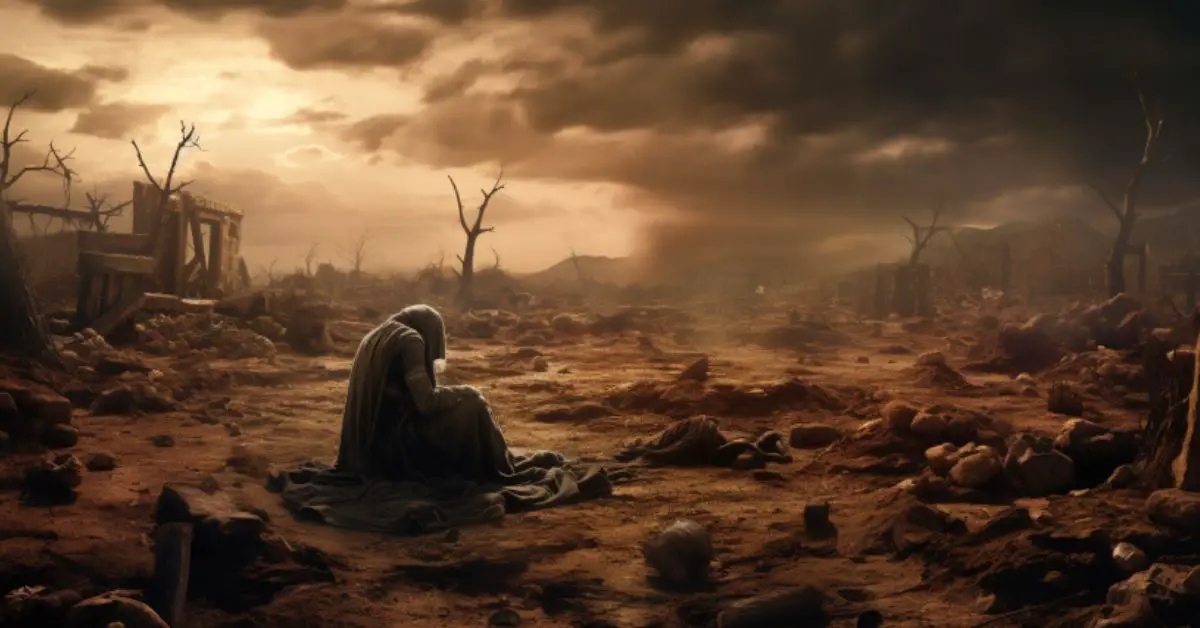
Famine has been a part of human history for thousands of years.
It has brought suffering, desperation, and even death to many civilizations throughout time.
In the Bible, famine is often seen as both a natural disaster and a divine warning.
It is used to wake people up, to turn them back to God, or to show the consequences of sin.
But famine is not just a thing of the past.
The Bible makes it clear that famine will be a key sign of the last days.
This raises important questions: Will famine be caused by human greed, natural disasters, or something more?
And how can we prepare for what the Bible says is coming?
The Bible Predicts Famines in the Last Days
When Jesus talked about the signs of the last days, famine was one of the first things he mentioned.
In Matthew 24:7, he said, “For nation will rise against nation, and kingdom against kingdom. And there will be famines, pestilences, and earthquakes in various places.”
This verse is part of what is known as the Olivet Discourse, where Jesus explains what will happen before his return.
Famine, war, and disease will shake the earth, and these will only be the beginning of troubles.
It’s like the world is groaning, warning us that something big is coming.
Jesus compared these events to birth pains—signs that something new is about to happen.
The closer we get to the end, the more intense and frequent these famines will become.
History has already shown times of famine, but the Bible tells us that future famines will be worse than anything the world has ever seen.
A Spiritual and Physical Famine
Famine in the Bible isn’t just about a lack of food.
There’s another kind of famine that is even more dangerous—a famine of God’s word.
In Amos 8:11-12, God warns, “Behold, the days are coming,” says the Lord God, “That I will send a famine on the land, not a famine of bread, nor a thirst for water, but of hearing the words of the Lord.”
This means that in the last days, people will struggle to find the truth.
They will be spiritually hungry, searching for guidance, but won’t be able to find it.
This kind of famine is just as deadly as a lack of food because without God’s word, people become lost.
When people ignore God’s truth for too long, they may reach a point where they can no longer find it.
This prophecy warns that in the last days, many will be desperate for spiritual nourishment, but it will be too late.
Just as physical famine weakens the body, spiritual famine weakens the soul and leads people away from God.
The Fourth Horseman: Famine and Death
The book of Revelation gives a powerful image of famine in the last days.
Revelation 6:5-6 talks about the third seal, where a black horse appears.
The rider of the black horse carries a pair of scales, and a voice says, “A quart of wheat for a denarius, and three quarts of barley for a denarius; and do not harm the oil and the wine.”
This verse describes a time when food will be so expensive that people will struggle just to survive.
A denarius was a full day’s wage in ancient times, and this prophecy tells us that during the last days, a whole day’s work will barely be enough to buy a small amount of food.
This paints a grim picture of widespread hunger and suffering.
The black horse represents the devastating effects of economic collapse, inflation, and food shortages.
Famine will not just be a result of natural disasters but also human corruption, war, and the greed of the powerful.
Why Will There Be Famine in the Last Days
There are many reasons why famine will come.
Some will be natural, like droughts, floods, and other environmental disasters.
Others will be caused by people—wars, greed, and bad decisions will lead to food shortages.
Revelation 13 suggests that the Antichrist will control the world’s economy, making it difficult for people to buy or sell without taking the mark of the beast.
This could mean that famine will not just come from a lack of food but from a system that prevents people from getting what they need unless they submit to evil.
Governments and world leaders may use food as a way to control people, forcing them to comply with unjust laws.
At the same time, people’s selfishness and lack of wisdom will contribute to food shortages.
Instead of preparing and sharing, many will hoard and waste, making the situation even worse.
Examples of Famine in the Bible
The Bible has many stories of famine that can teach us lessons about faith and survival.
In the time of Joseph, Egypt went through seven years of plenty followed by seven years of famine (Genesis 41).
God gave Pharaoh a dream, and Joseph interpreted it, helping Egypt store food for the coming disaster.
Because of this, many lives were saved.
This teaches us the importance of preparation and trusting God’s wisdom.
In 1 Kings 17, the prophet Elijah experienced a famine, but God provided for him through a widow in Zarephath.
Even when food was scarce, God made sure his servant had enough.
These stories remind us that even in times of famine, God can provide for those who trust in him.
How Should We Prepare
The Bible doesn’t tell us to live in fear, but it does tell us to be wise.
Proverbs 6:6-8 talks about the ant, which works hard and stores food for the future.
This is a good lesson for us.
While we may not be able to stop famine from coming, we can prepare by being good stewards of what God has given us.
Stocking up on food and supplies is not just practical—it’s biblical.
But more importantly, we should prepare spiritually.
Just as we store food for physical hunger, we should store up God’s word in our hearts to prepare for times of spiritual famine.
Reading the Bible, praying, and growing in faith will help us stand strong even when the world around us is struggling.
God’s Promises During Famine
Even though the Bible warns of famine, it also gives hope.
Psalm 37:19 says, “They will not be ashamed in the time of evil, and in the days of famine they will be satisfied.”
This promise is for those who trust in God.
Even when things seem hopeless, God provides for his people.
Jesus multiplied food for thousands, and he can still do the impossible today.
In times of crisis, God’s people do not need to fear.
He is able to supply our needs, whether through miracles or through the kindness of others.
Trusting in God means knowing that no matter what happens, he is still in control.
Final Thoughts
Famine in the last days is both a physical and spiritual warning.
The Bible tells us it will happen, but it also reminds us that God is in control.
While the world may be shaken, those who put their trust in God will find peace and provision.
The question is—are we ready?
Not just with food, but with faith?
Because in the end, spiritual hunger is far worse than physical hunger.
And only God can satisfy the soul.